
Partnership Tax Solutions
Distribution waterfalls and capital accounts, computed from one ledger
SubK models a partnership's operating agreement as a tier stack, runs every distribution through it, and keeps 704(b) book capital, tax capital and §704(c) layers consistent with it. Built for CPAs who prepare partnership returns, and for the sponsors and GPs who make the distributions.
Model the agreement
The distribution waterfall, tier by tier
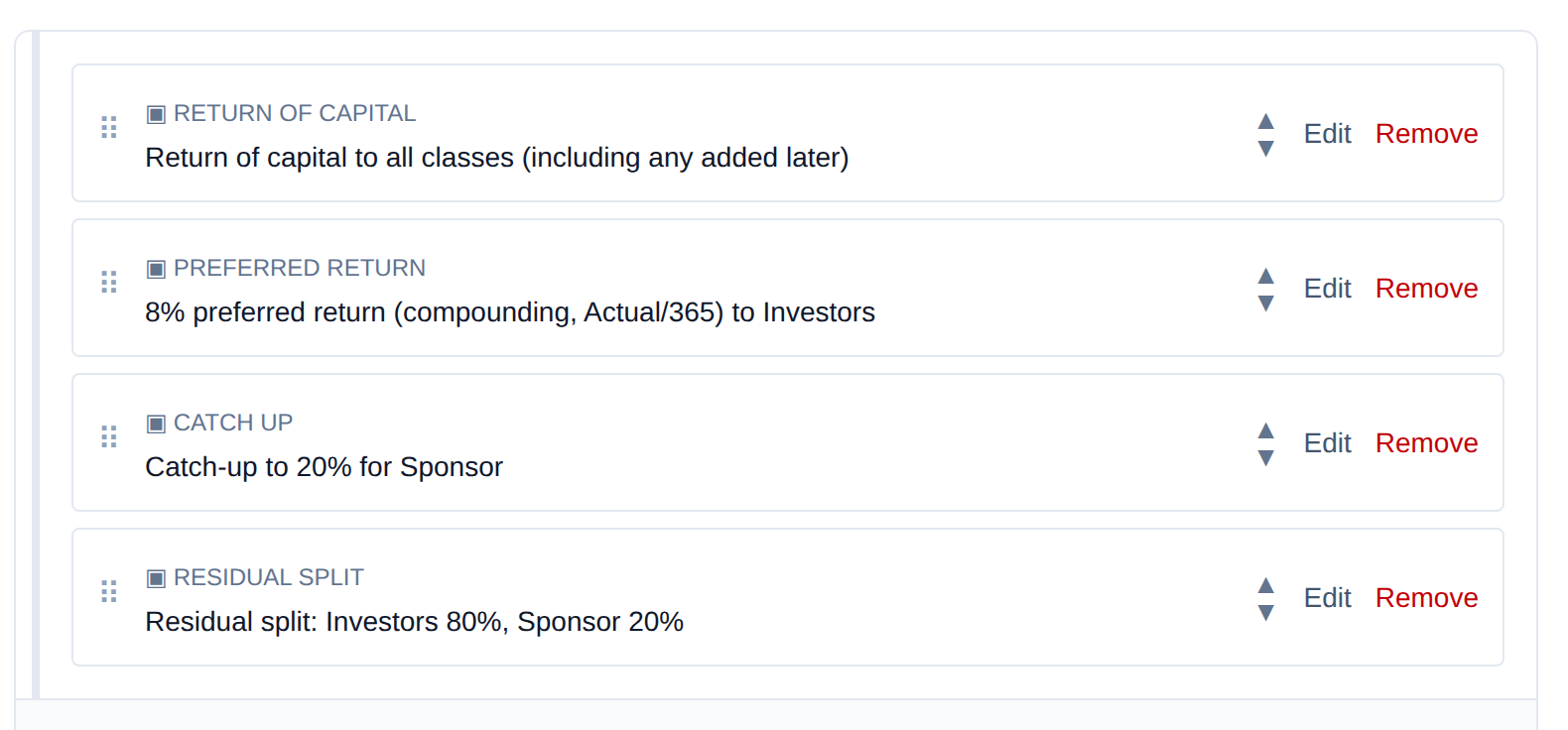
Build the stack the operating agreement describes from six tier types: return of capital, preferred return, catch-up, fixed amount, residual split and hurdle. Preferred returns accrue simple or compounding. Hurdles measure IRR or MOIC for a whole partner class. Every figure in SubK is computed from this stack.
Run a distribution
Every dollar, by tier and by partner
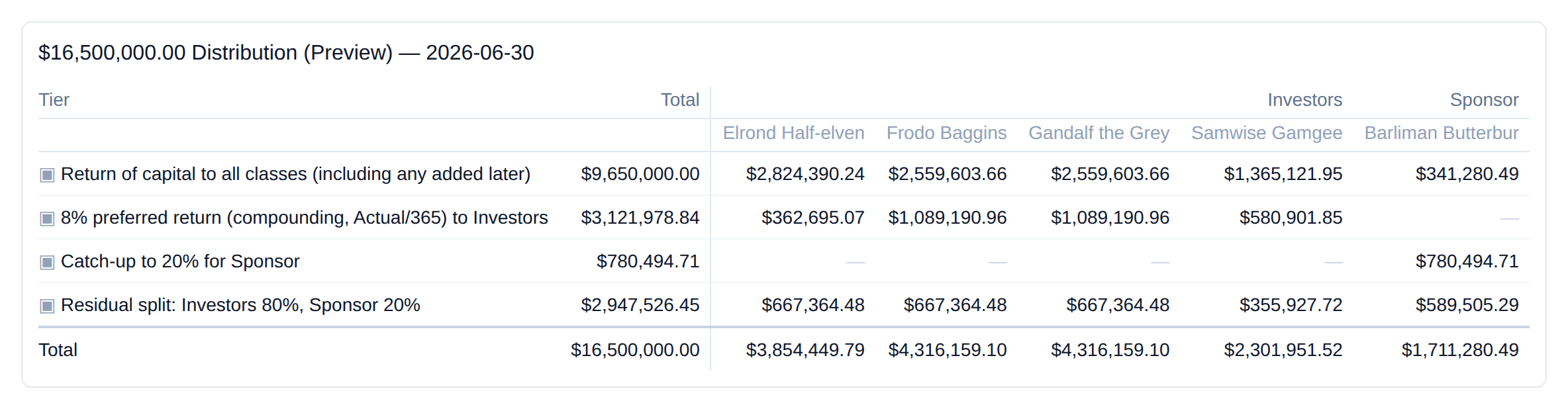
Enter a date and an amount and see how the distribution goes out: which tier pays it, and to which partner, before anything is recorded. Working the other way, the distribution calculator finds the smallest distribution that pays one or more partners the amounts they need.
Capital accounts
704(b) book and tax capital, replayed from the ledger
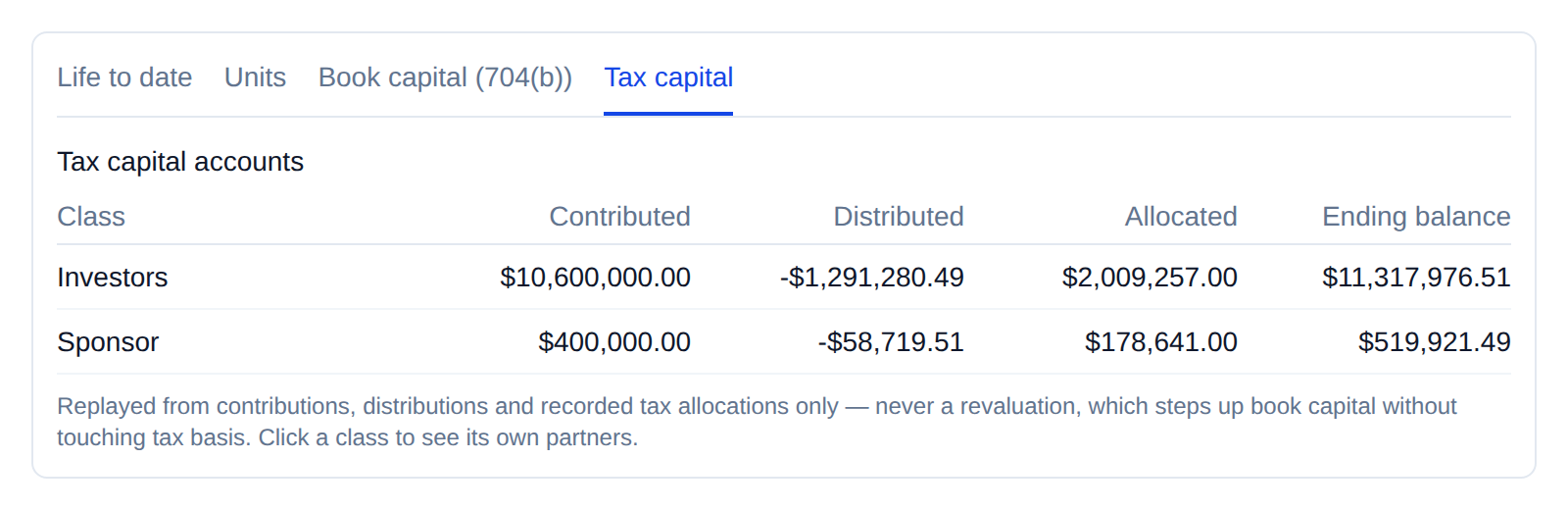
Contributions, distributions, book income and loss, revaluations and tax allocations are dated entries in one ledger. Book and tax-basis capital accounts are replayed from it every time they're read, by partner and by class, so they always agree with the distributions behind them. Book income and tax items are allocated to target capital through the same tier stack.
Fixed assets
Layers by asset: traditional, curative or remedial
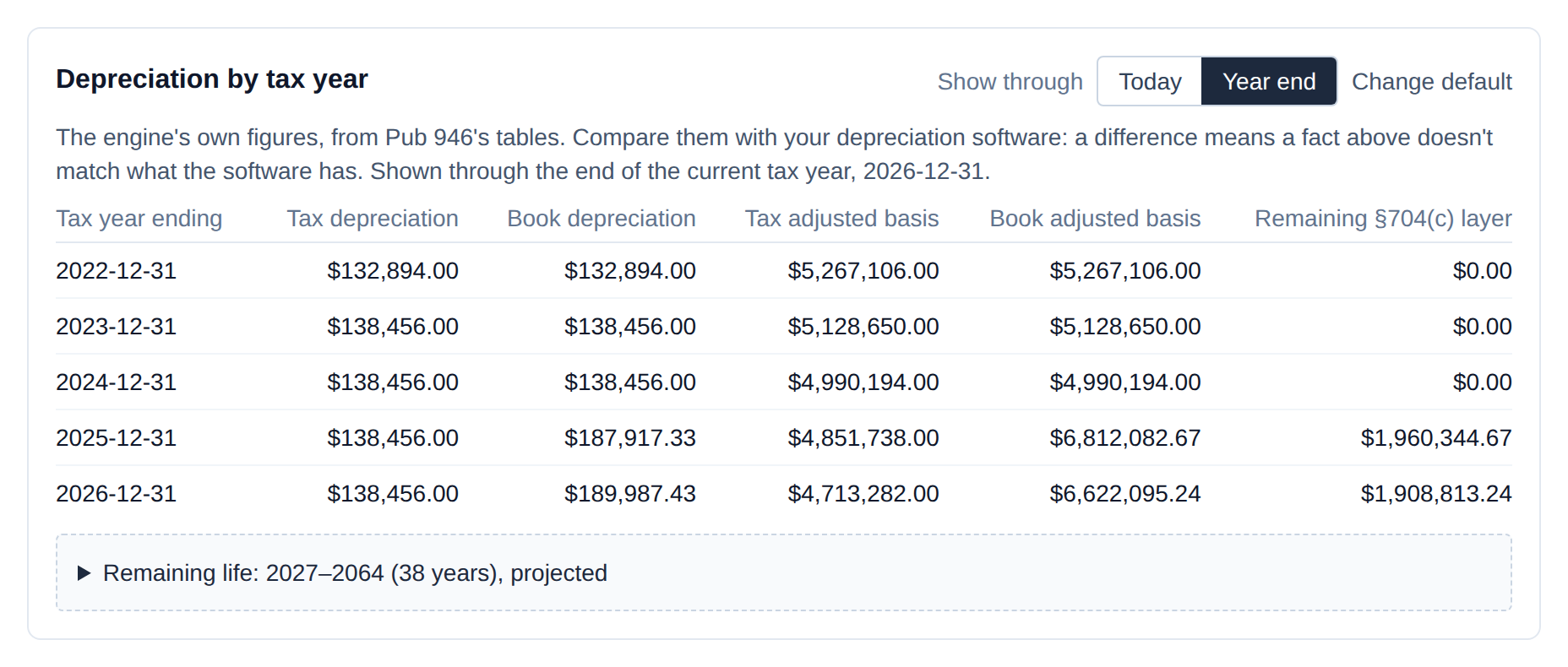
Link a revaluation to the assets it stepped up, and SubK carries each asset's reverse §704(c) layer year by year, with MACRS depreciation reproduced from Pub. 946's tables. Set the method for the deal or for each asset. Curative allocations use the line items you designate, and each asset's page projects its remaining life.
Excel export
One workbook per deal: distributions, life-to-date returns, book and tax capital accounts, a K-1 grid, tax allocation ratios for your tax software, and fixed asset and §704(c) detail.
Stops instead of guessing
When an answer isn't determined, SubK stops and says why: an IRR with more than one solution, a revaluation not fully attributed to assets, a §704(c) method the deal hasn't chosen.
Agreement changes restate history
Correct the tier stack and every recorded distribution and allocation is recomputed from it. Once a deal has recorded history, the tier screens say so before you save.
Bulk entry and import
Paste partners, contributions, unit issuances and distributions from a spreadsheet, and import a fixed asset register from an Excel template, previewed before anything is saved.
Audit trail
Every change to a deal's data is recorded, with who made it and when. Recorded entries are never edited; a mistake is fixed with a correcting entry.
Scenario projection
Enter an admission, a revaluation, asset purchases and sales, and distributions, and see each year's projected taxable income or loss by class, per $1,000 invested and per unit. It runs through the deal's real tier stack without recording anything, and prints as a one-page summary for a prospective investor.
Questions about how SubK works? Read the FAQ